
Natural Lighting in Al Reem Island Apartments: How to Make Your Waterfront Home Actually Bright
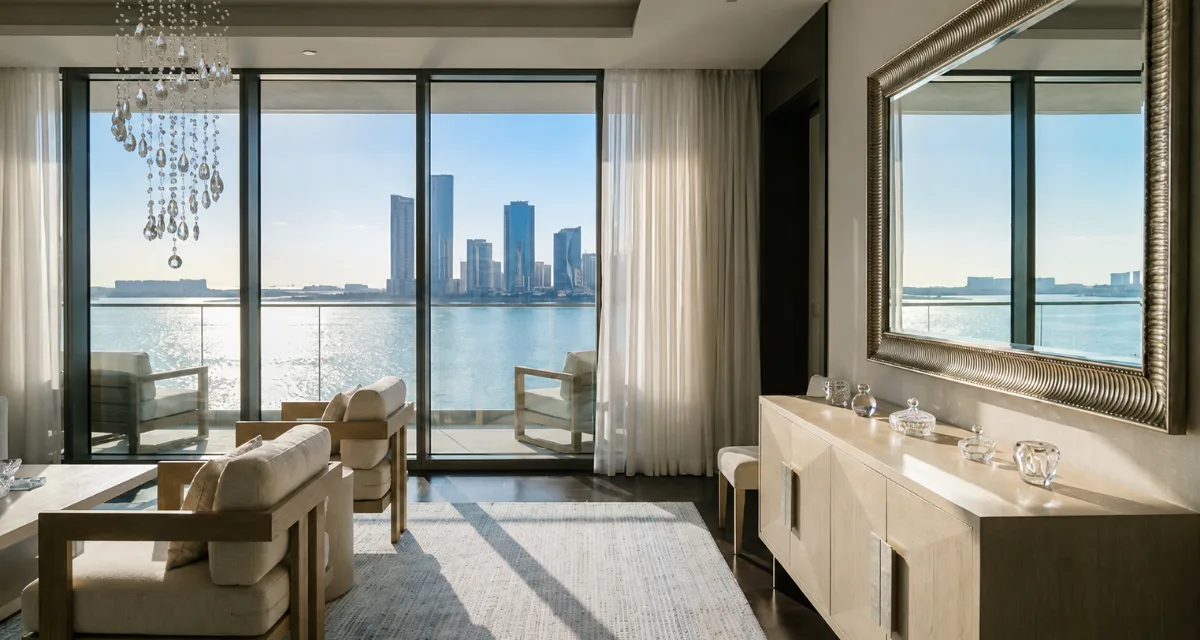
You buy a waterfront apartment for the light and the view, but sometimes even at 3 PM you still need to switch on the lights. The corners still look dim. It’s a very common disappointment in Al Reem Island.
You paid for the glass, the view, the address but the apartment still doesn’t feel as bright as it should. This guide is about how to fix that. How to actually use the natural light you already have, not just look at the water from a dark room.
Why Light Feels Different in a Waterfront Apartment
Light behaves differently when there is water in front of you. It’s not just design talk, it’s physics. Sunlight hits the water and bounces back up into your apartment. That’s why a waterfront unit in Al Reem feels brighter at certain times than an inland unit with the same window size.
But that same reflection also creates a problem. In the afternoon, especially in west and south-facing flats, glare and heat become too much.
So you get both sides more light, but also more heat and glare. You need to control it properly with smart layout planning, window treatments, and the right interior solutions for your apartment. Learn more about our flat interior design services in Abu Dhabi
Why Natural Light Matters Beyond Looks
A bright apartment isn’t just more pleasant to look at daylight exposure is linked to better mood, sharper focus, and more stable sleep patterns. This is actually a well-studied area in the UAE specifically: research on interior lighting in the region has looked at how spaces with little access to direct daylight lean too heavily on artificial lighting, which raises both energy use and the loss of that natural daylight benefit. For a climate with sunlight available almost year-round, a waterfront apartment that actually uses its natural light isn’t just a design win it’s a wellbeing one too.
This is part of why getting the details right matters so much here. The light is already available in abundance on Al Reem Island; the difference between a flat that feels alive and one that feels flat usually comes down to whether the layout and finishes let that light do its job. Professional apartment interior design services can help optimise layouts, finishes, and lighting choices to make better use of the natural light already available.
What Decides How Bright Your Unit Feels?
It’s not just about having big windows. Many things decide whether your flat feels bright or dull:
Orientation
If your flat faces the canal or open sea, you get reflected light for a longer time than a flat that faces another building.
Floor Height
Higher floors get direct sun earlier and later in the day. Lower floors mostly depend on light reflected from the water.
Window-to-Wall Ratio
Many towers in Reem Island have big glass walls, but if you put heavy curtains or big partitions inside, you cancel that advantage.
Type of Glass
Normal glass, tinted glass, and E glass all of them allow different amounts of light and heat. This also changes your cooling bill.
Balcony Depth
A deep balcony can give a lot of shade. Many people don’t expect it, but it can make the living room much darker.
Interior Finishes
Dark flooring, dark furniture, and dark paint absorb light. A well-finished light interior will bounce that same light much further inside
None of these work alone. You can have the best view, but with wrong interiors, the flat will still feel dark.
How to Make Your Apartment Brighter Without Breaking Walls
You don’t need to add more windows. You just need to use the light that is already coming in.
- Don’t block the window path keep sofas, tall shelves, and cupboards away from the direct line between the window and the rest of the room
- Use sheer curtains instead of heavy drapes sheers cut the harsh sun but still let most of the light pass
- Put a mirror opposite or beside the water view it will bounce the reflected light deep into the inner rooms
- Choose light, matte or satin-finish surfaces light-coloured floors and walls reflect light without creating extra glare, and a slight sheen bounces even more than pure matte, though very glossy finishes can highlight uneven walls
- Open up rooms glass partitions or an open-plan kitchen lets light travel from the living room to the hallway and kitchen
- Use track curtains so you can fully open the glass during the day and close it only when needed
- For windowless spaces like internal bathrooms or walk-in closets, a skylight or light tube can bring in genuine daylight where no wall-facing window is possible
These small changes cost much less than civil work, but they make the biggest difference in how your home feels.
How to Control Glare and Heat From the Water
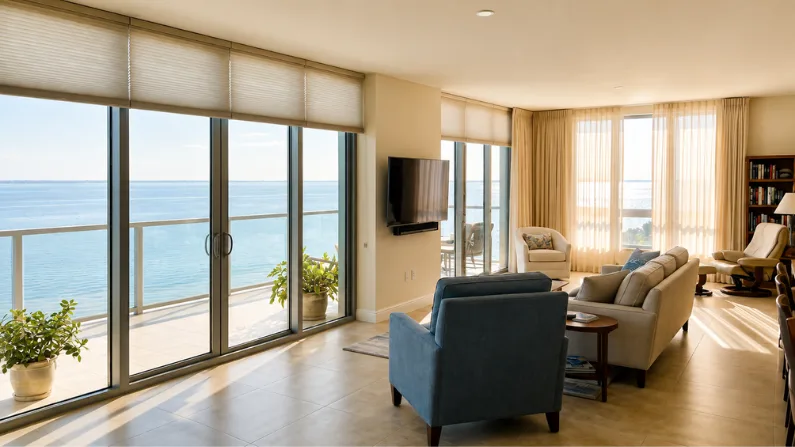
The Gulf sun reflecting off the water is very strong. If you don’t control it, your TV screen becomes invisible, your room becomes hot in the afternoon, and you can’t even sit there.
You don’t need to block the view. You just need to control it:
- Solar film on glass – it cuts heat and UV but keeps the glass clear
- Motorized blinds with sensors – they adjust automatically as the sun moves
- Sheer + blackout combo – sheers for day time, blackout for night privacy
- Smart furniture placement – don’t put your work desk or TV directly in the glare path, and position reading nooks or workspaces where they catch soft daylight instead of direct afternoon glare
The goal is to keep the view, but control how much direct light comes in.
Interior Design Choices That Change Everything
After curtains, your interior choices decide how far the light goes:
- Light and slightly reflective surfaces – polished floors, light countertops, glossy cabinets bounce light further
- Open-plan layout -removing an unnecessary wall lets light go from the sea-facing side to the rest of the flat
- Good lighting layers – so that when natural light goes down in the evening, the inner rooms don’t feel dark
- Right furniture size – a big, dark sofa near the window blocks more light than you think
- Glass or open shelves instead of solid closed cabinets – so light passes through
- A touch of greenery near the window – plants don’t create light, but they soften harsh daylight and make a bright room feel calmer instead of stark
In Al Reem, waterfront interior design succeeds or fails on these exact decisions. The glass does the first 50%, but your finishes decide if that light reaches every corner. With professional flat interior design services in Abu Dhabi, you can plan the right layout, materials, furniture, and lighting to make the most of your waterfront apartment.
Common Mistakes That Make Flats Look Dark
We see these same mistakes in many well-finished units:
- Putting a tall bookshelf or wardrobe right next to the main window
- Using only heavy blackout curtains with no sheer option for daytime
- Painting inner rooms in dark, flat matte colours that absorb rather than reflect light
- Closing the sea-facing living room with a solid wall instead of a glass partition
- Forgetting about balcony shade during layout planning and then wondering why the living room is dark
Most of these can be fixed without major work, but it’s much easier to fix them at the design stage.
Should You Do It Yourself or Call a Designer?
Changing curtains and adding mirrors you can do it yourself.
But for things like solar film, motorized blinds, glass partitions, skylights, or changing the floor plan to get better light flow, it’s better to call a professional. They will check the actual sun path, your glass specification, and your floor height before suggesting a solution.
A quick DIY fix for glare often goes wrong either it doesn’t solve the heat, or it blocks the view completely.
How Apartment Layout Affects Natural Light
The layout of your apartment has a major impact on how far daylight travels. Even a waterfront unit with large windows can feel dark when solid walls, tall furniture, or poorly positioned rooms block the path of light.
Open layouts generally allow daylight to move more freely between the living room, dining area, and kitchen. Where privacy is needed, glass partitions can be a practical alternative to solid walls because they separate spaces without completely stopping the light.
The position of furniture matters too. Large wardrobes, bookshelves, and high-backed furniture placed close to windows can create unnecessary shadows. A well-planned layout keeps the brightest areas open and allows natural light to reach deeper into the apartment.
Choosing Colours and Finishes That Reflect More Light
Your interior finishes can either help natural light travel through the apartment or absorb it. Light-coloured walls, flooring, and furniture generally reflect more daylight and make rooms feel brighter and more spacious.
Matte and satin finishes can work well for reducing harsh reflections, while carefully placed glossy or reflective surfaces can help bounce light into darker areas. Mirrors are also useful when positioned to reflect daylight or a waterfront view.
This does not mean every surface needs to be white. Soft neutral colours, warm beige tones, and lighter natural materials can still create a comfortable interior while helping the apartment make better use of available daylight.
Conclusion
Making a waterfront apartment bright is not about adding more windows. It’s about understanding how direction, floor height, glass type, and interior finishes work together. When you make the right choices, the light travels further inside, glare stays controlled, heat stays low, and the space actually supports how you feel day to day.
For people living in Al Reem Island, the result is a home that finally matches the view you paid for bright, comfortable, and usable all day, not just during one perfect sunset hour.
If you are planning a renovation or a new fit-out, YMS Group’s interior fit-out services in Abu Dhabi can help with lighting assessment, layout planning, material selection, and complete project execution for waterfront apartments.
Frequently Asked Questions
1. Why does my Al Reem apartment feel dark even with big windows?
Mostly because of interiors, not the glass. Heavy curtains, dark furniture near the window, or a closed floor plan can block light from reaching the rest of the flat.
2. How can I make it brighter without renovation?
Try sheer curtains instead of heavy ones, add mirrors to reflect light inside, and move big furniture away from the window. You will see a clear difference.
3. Does water-facing always mean more light?
Usually yes, because water reflects more light up. But it also means more glare and heat in the afternoon, which you need to manage.
4. What is the best curtain for a waterfront flat with a lot of glare?
A double layer works best sheer for day time to cut glare softly, and a blackout layer for night privacy. Better than one single heavy curtain.
5. Is solar film worth it?
For flats that get strong afternoon sun, yes. It reduces heat and glare a lot while keeping the view clear. It’s one of the best upgrades for Al Reem units.
Our Services
Commercial Interior | Residential Interior | General Contracting | Waterproofing
Ready to renovate?
Book a free consultation with YMS Group today!
LIMITED-TIME OFFER!
Interior Design Packages from 5,000 AED – Transform your Home or Office with Premium Fit-Outs by YMS Group
📍 Abu Dhabi & Al Ain
Modern Designs | On-Time Delivery | Custom Solutions
Ready to Upgrade Your Space? Let’s Start With a Free Site Visit
🔐 What Happens After You Submit the Form?
📞 We call you within 1 hour (working hours) 📅 Schedule free site visit within 24 hours🧾 Share a fixed quotation with delivery timeline👷 Assign dedicated manager after approval
📍 Serving Abu Dhabi & Al Ain 📞 Call Us: +971 50 770 0141 📲 WhatsApp Now for Instant Quote